
Some links on this page are affiliate links, marked paid link. If you buy through them, we may earn a commission at no extra cost to you. Disclosure.
How to Start a High Tunnel: Siting, Sizing, NRCS EQIP Cost-Share and What to Grow
Plan a high tunnel step by step: siting, size, NRCS EQIP cost-share rules (Practice 325), costs and the crops that pay. Sourced and current for 2026.
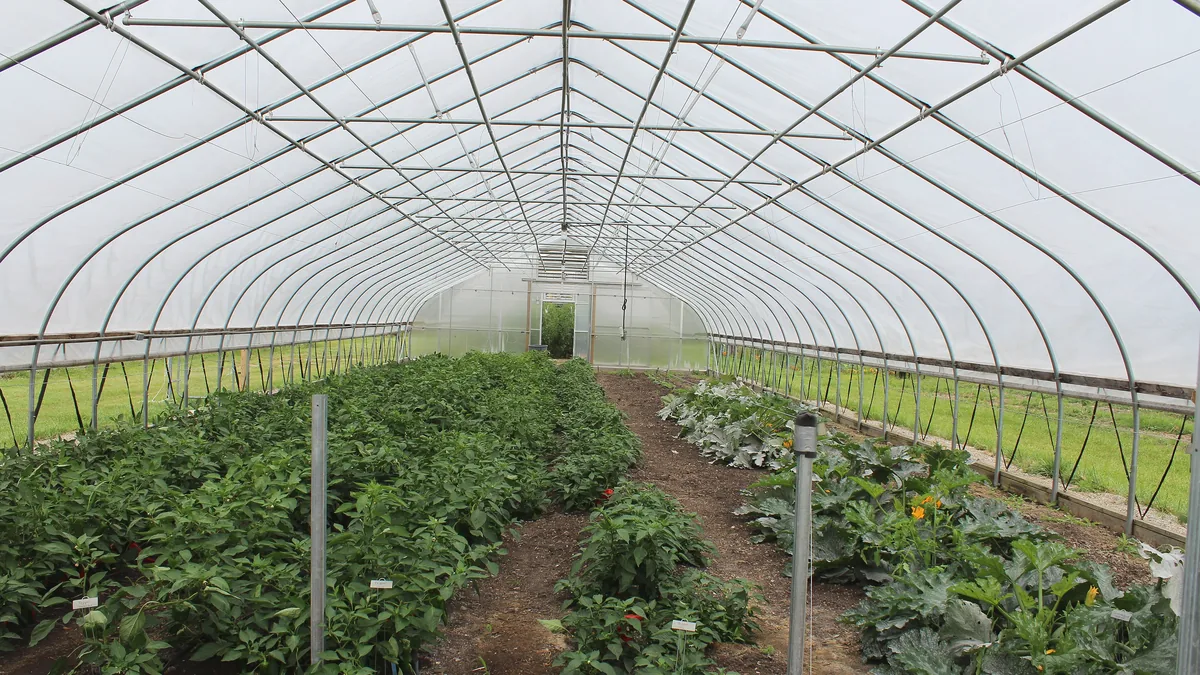

A high tunnel, often called a hoop house, is an unheated, plastic-covered frame that crops grow under, planted in the ground. For a ranch family, it can turn a corner of the homestead into early tomatoes, winter salad greens and a second income stream for a farm stand or beef customers' orders. Through the Environmental Quality Incentives Program (EQIP), USDA's Natural Resources Conservation Service (NRCS) will pay part of the cost.
This guide walks through how to start one: what a high tunnel is (and isn't), how to pick the site, how big to build, how the NRCS cost-share works, and what to grow first. Program facts were checked against nrcs.usda.gov on November 11, 2026.
High tunnel, greenhouse or low tunnel?
NRCS describes high tunnel systems as unheated, plastic-covered structures that sit between open fields and heated greenhouses. They are usually covered with a single layer of plastic and passively vented with roll-up sides and end walls (NRCS High Tunnel System FAQ). The differences matter, especially for cost-share:
- High tunnel: crops grow in the ground, there is usually no heat, and it's tall enough to walk in and often drive a small tractor in. It is eligible for EQIP.
- Greenhouse: heated, often with benches and pots. NRCS's practice standard says Practice 325 "does not include greenhouses or low tunnel systems" (Practice Standard 325).
- Low tunnel / caterpillar tunnel: knee-to-head-high hoops over a bed. These are cheaper and seasonal, and not eligible under Practice 325.
NRCS lists the benefits as a longer growing season, better plant and soil quality, less nutrient and pesticide movement, and local food that needs less transport. Because the cover keeps rain off the plants, growers can use drip irrigation to deliver water and nutrients precisely (NRCS High Tunnel Initiative).
Step 1: Pick the site
Site choice is hard to undo. The University of Kentucky's High Tunnel Production Toolkit (updated 2025) and the NRCS standard agree on most points:
- Level, well-drained ground. NRCS requires a level grade, or a natural slope of no more than 5%. The UK toolkit warns against slopes and low spots where water stands, and suggests regrading if needed while preserving topsoil.
- Plan for runoff. NRCS points out that high tunnels shed a lot of water and can create drainage problems where none existed. Runoff has to be directed away from the tunnel, with a basin, reservoir or stable outlet if it could cause erosion. As a rough guide (simple arithmetic, not an NRCS figure), one inch of rain on a 30 × 96-foot roof is about 1,800 gallons: 2,880 square feet × 0.623 gallons per square foot per inch.
- Water close by. NRCS requires the tunnel to sit near a viable water source for irrigation. Electricity is optional, but the UK toolkit notes it is needed to inflate a double-layer roof.
- Sun and shade. Keep the site clear of trees and buildings that shade it or drop debris that can puncture plastic.
- Orientation. The UK toolkit says that south of 40° north latitude, which includes Kentucky and most of California, a north-south layout gives more even light through the day. Growers who prioritize fall, winter and spring crops may choose east-west to catch more low-angle winter sun. Setting the long side across the prevailing wind helps roll-up sides vent.
- Utilities. NRCS requires tunnels to avoid buried public utilities. Call 811 before digging.
- Wind and snow. NRCS requires the cover to come off at season's end where snow could damage the structure, unless the manufacturer designed it for the expected snow load. Where wind is a risk, the cover and frame must be rated for expected wind loads.
Step 2: Choose a size and style
The UK toolkit puts it plainly: the right width and length depend on budget, production plans and available ground. A few rules narrow the choices:
- Minimum height. To qualify for NRCS cost-share, the frame must be at least 6 feet tall at the peak. It must be built from a manufactured kit to the maker's instructions, with a frame of metal, wood or durable plastic (Practice 325).
- Cover. Poly covers must be at least 6-mil, greenhouse-grade and UV-resistant, and any cover must have at least a 4-year lifespan.
- Roof shape. Gothic (peaked) roofs shed snow and rain better. The UK toolkit recommends them for Kentucky, and for the same reason they are common anywhere with snow. Round (Quonset) roofs cost less where snow isn't a concern.
- Bow spacing. The UK toolkit recommends 4-foot bow spacing for Kentucky conditions, for structural strength against snow and wind.
- Single or double layer. A single layer is enough for spring-through-fall growing. Winter growers should consider a double layer, which needs electricity for an inflation blower.
- Doors and ventilation. Size end-wall doors for the equipment that will go through them. Roll-up sides are standard. Ridge vents, end-wall vents and circulation fans are options.
- Shade cloth. The UK toolkit calls 30% shade cloth "a versatile choice" for many summer crops in Kentucky. Hotter, sunnier valleys may need more.
What kits cost (2026 examples)
Kit prices scale with width, length and roof style. As one example, Bootstrap Farmer lists the following on its US store as of November 11, 2026 (frame and plastic kits; shipping, site work, end walls and labor vary):
| Kit (Bootstrap Farmer) | Smallest listed size and price | Price range across sizes |
|---|---|---|
| Essential Round High Tunnel | 14 × 20 ft, no door: $2,240 | $2,240 – $6,400 |
| Essential Gothic High Tunnel | 14 × 20 ft: $3,332 | $3,332 – $9,800 |
| Premium Round All-Metal High Tunnel | 14 × 20 ft: $4,200 | $4,200 – $15,600 |
Prices are from the retailer's own product listings and change often. Whether a particular kit meets NRCS's kit, warranty and height requirements is up to the local NRCS office. Ask before ordering.
Step 3: Get NRCS EQIP cost-share (Practice 325)
The High Tunnel System Initiative is part of EQIP. NRCS's FAQ says it is open to individuals, businesses, nonprofits, Indian Tribes, legal entities and joint operations that are already producing crops or have a "demonstrated interest" in crop production. That includes community gardens and CSA operations. An EQIP application for a high tunnel is considered for all eligible EQIP initiatives at once (NRCS FAQ).
The rules that trip people up
From the national Practice Standard 325:
- Crops must grow in the natural soil profile. Tables, benches, pots and hydroponics don't qualify. Raised beds are allowed up to 12 inches deep.
- No livestock, no storage. The tunnel "cannot be used to provide shelter or housing for any livestock, or to store supplies or equipment." Ranchers should not plan on it as a calving shed or hay barn.
- Kit, warranty, instructions. The NRCS FAQ says eligible tunnels must be bought as a kit, with warranties and installation instructions from a manufacturer.
- Supporting practices may be required to handle runoff and other resource concerns, such as critical area planting, mulching, micro-irrigation, subsurface drains or underground outlets (NRCS initiative page).
The national standard was last updated in 2015, and NRCS says its next review is expected to begin in October 2026 (NRCS standard page). States publish their own versions in the Field Office Technical Guide, so applicants should ask the local office for the current state standard.
Step by step
NRCS lays out the process on its initiative page:
- Make a plan with an NRCS planner. Technical assistance is free.
- Apply on form NRCS-CPA-1200. Applications are taken year-round but ranked in batches, so ask the district conservationist for the next ranking deadline. Regrarian Resource's grant calendar tracks known cutoff dates.
- Prove eligibility. NRCS asks for a tax ID, a deed or lease showing control of the land, and an FSA farm number. Producers new to USDA register with the Farm Service Agency first, usually in the same building.
- Ranking. NRCS scores applications on local resource concerns and conservation benefits.
- Contract, build, get paid. If selected, the producer chooses whether to sign. After signing, NRCS provides the specifications. Payment comes after the work is installed and inspected and meets the standard.
Regrarian Resource's EQIP application guide covers the paperwork order in more detail, and it advises not starting work or buying anything before the contract is signed. The Grant Starter Kit has a document checklist.
How much does NRCS pay?
Payment rates are set per square foot, by state and fiscal year. NRCS re-evaluates them every year and releases updated schedules in the first quarter of each fiscal year (October to December) (California payment schedule page; all state schedules). The local office can quote the current rate for the exact scenario.
Beginning, veteran, limited-resource and socially disadvantaged producers can choose NRCS's advance payment option. It pays at least 50% of the contracted payment for a practice up front, before installation, and the money must be spent within 90 days. NRCS defines a beginning farmer or rancher as someone who has operated a farm or ranch for fewer than 10 consecutive years. These producers are also eligible for a higher payment rate (NRCS EQIP Advance Payment Option).
Step 4: Decide what to grow
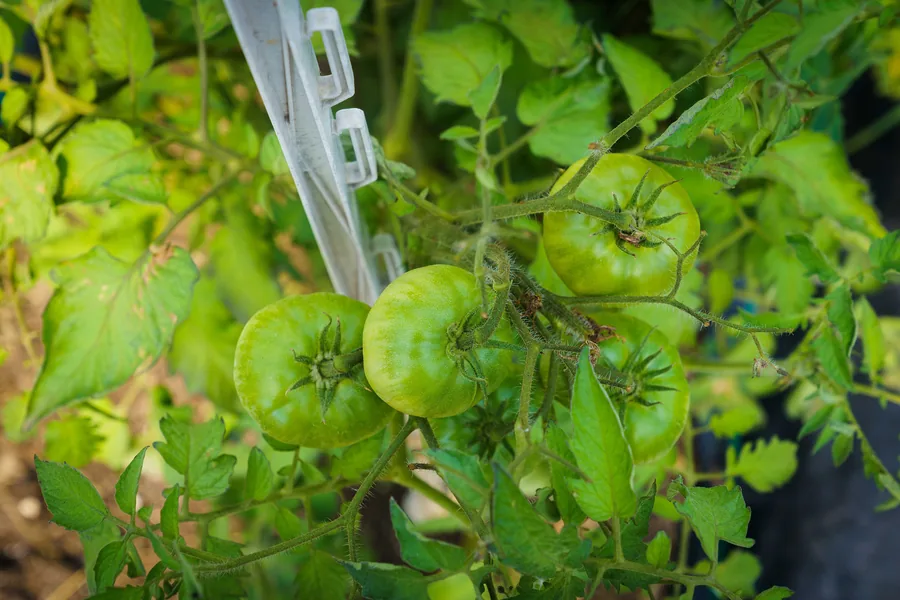

The best first crops are ones that are worth more because of the tunnel, either by coming early or late or by being cleaner and less storm-damaged than field crops. The case studies collected in the UK toolkit point to a classic two-crop year:
- Warm season: tomatoes, with basil alongside. One market farm profiled in the toolkit, Star Light Gardens, grows tomatoes and basil from early May through late September or early October, and stopped growing field tomatoes because tunnel yield and quality were so much better. Another farm reports that member surveys put tomatoes in the top five most popular crops for its CSA. Seed: High Mowing tomato seed paid link and basil seed paid link.
- Cool season: spinach and salad greens. Star Light Gardens grows spinach in the tunnel from mid-October through early April. The toolkit's growers name spinach, lettuce and other salad greens as their winter mainstays. Seed: spinach paid link, lettuce paid link, salad mixes paid link and kale paid link.
- Other warm-season options: peppers and cucumbers also benefit from the tunnel's heat and rain protection. Seed: peppers paid link and cucumbers paid link.
Soil health inside the tunnel. NRCS notes that cover crops and crop rotation work in high tunnels too, preventing erosion, suppressing weeds and breaking pest cycles. A soil test before the first planting gives a baseline. The UK toolkit has a full chapter on high tunnel soil health. A short cover crop between the summer and winter crops keeps living roots in the ground. Seed: High Mowing cover crop seed paid link.
Selling it. A ranch already selling beef shares has a customer list. A box of early tomatoes or winter greens alongside a beef pickup is a natural add-on. Regrarian Resource's beef share guide covers the direct-sales side for California producers.
A first-year timeline
- Fall or winter: Visit the USDA Service Center, get an FSA farm number, walk the site with NRCS, and apply before the next ranking cutoff.
- While waiting: Test the soil, plan runoff and water, and get kit quotes that meet the Practice 325 requirements, without ordering yet.
- After the contract is signed: Order the kit, prepare the site, build to the manufacturer's instructions and the NRCS specifications, and keep receipts and photos.
- First season: Start with one warm-season crop and one cool-season crop, keep yield and sales records, and fit a cover crop into the gap.
- Certify completion with NRCS to get paid.
Sources
- USDA NRCS: High Tunnel Initiative, High Tunnel System FAQ (2024), Conservation Practice Standard 325 (High Tunnel System), EQIP Advance Payment Option, Payment schedules
- University of Kentucky Center for Crop Diversification, High Tunnel Production Toolkit (2025 update)
- Bootstrap Farmer kit prices: retailer product listings, checked November 11, 2026
Facts checked November 11, 2026.
Free: Grant Starter Kit
Checklists and templates for EQIP, SARE and Zero Foodprint applications.